



Expert Guide to 7 Key Systems: What are the different types of truck parts in 2025?
12월 18, 2025
초록
An examination of the modern heavy-duty truck reveals a complex amalgamation of interconnected systems, each comprising numerous specialized components. This document provides a comprehensive analysis of the different types of truck parts, organized into seven primary functional systems: the engine and powertrain, transmission, brakes, chassis and suspension, HVAC, electrical and electronics, and emissions control. It explores the fundamental principles governing each system and details the function of specific critical parts, including the role of the engine's air flow meter in combustion efficiency and the purpose of the truck exhaust pipe in managing byproducts. The transmission system's operation is detailed with a focus on the transmission solenoid valve's function in gear selection. Safety-critical components like the hand brake valve within the air brake system are explained, alongside comfort-related parts such as the truck blower motor in the HVAC system. The analysis synthesizes technical information to provide a holistic understanding of truck mechanics, intended for both professional technicians and vehicle enthusiasts, highlighting the symbiotic relationship between these intricate assemblies.
주요 내용
- A truck is a system of systems; understanding each is vital for maintenance.
- The engine, transmission, and brakes form the core operational triangle.
- What are the different types of truck parts? They fall into distinct functional categories.
- Electronic parts like the air flow meter are as important as mechanical ones.
- Safety components, such as the hand brake valve, require regular inspection.
- Proper maintenance of the emissions system protects both the engine and environment.
목차
- The Engine and Powertrain System: The Heart of the Operation
- The Transmission System: Translating Power to Motion
- The Brake System: The Unwavering Guardian of Safety
- The Chassis and Suspension System: The Supportive Skeleton
- The HVAC System: Maintaining Cabin Comfort and Driver Focus
- The Electrical and Electronic System: The Nervous System
- The Emissions Control System: A Modern Mandate
- 자주 묻는 질문(FAQ)
- 결론
- 참조
The Engine and Powertrain System: The Heart of the Operation
To begin to understand the complex world of heavy-duty trucks, one must first appreciate the engine. It is far more than a mere source of power; it is a carefully orchestrated thermal and mechanical symphony. The powertrain encompasses the engine and every component that generates power and delivers it to the wheels. Think of it as the truck's cardiovascular system, with the engine as the heart, pumping life into the entire machine. When people ask, "What are the different types of truck parts?", the conversation almost invariably starts here, in the crucible of combustion where fuel is transformed into force.
The Core Engine Components
At its most basic level, a diesel truck engine operates on the principle of compression-ignition. Unlike a gasoline engine that uses a spark plug to ignite the fuel-air mixture, a diesel engine compresses air to such a high pressure that its temperature rises dramatically. When diesel fuel is injected into this superheated air, it ignites spontaneously. This controlled explosion forces a piston down, turning a crankshaft, and thus, mechanical power is born.
The main actors in this drama are the engine block, which is the foundational structure housing the cylinders; the pistons, which move up and down inside the cylinders; the connecting rods, which link the pistons to the crankshaft; and the crankshaft itself, which converts the linear motion of the pistons into rotational motion. The cylinder head sits atop the block, containing the valves that control the intake of air and the expulsion of exhaust, along with the fuel injectors. Each of these components is a marvel of material science, designed to withstand immense pressures and temperatures for millions of cycles.
Fuel Injection and Air Management: The Role of the Air Flow Meter
For the engine to run efficiently, the combustion process must be precise. The engine control unit (ECU), the truck's central computer, needs to know exactly how much air is entering the engine to calculate the perfect amount of fuel to inject. This is the job of the mass 공기 유량계. Located in the intake tract between the air filter and the intake manifold, the air flow meter uses a heated wire or film to measure the mass of air flowing into the engine.
How does it work? As air flows past the heated element, it cools it down. The electronics in the sensor measure how much electrical current is needed to keep the element at a constant temperature. The more air that flows by, the more it cools the element, and the more current is required to heat it back up. This current measurement is directly proportional to the mass of the air. The ECU receives this signal and makes instantaneous adjustments to the fuel injection timing and duration. A faulty air flow meter can send incorrect data, leading to poor fuel economy, reduced power, and increased emissions, demonstrating how a small sensor plays a massive part in the engine's overall health.
Turbochargers: Forcing Power and Efficiency
Modern diesel engines rely heavily on turbochargers to produce their immense torque figures. A turbocharger is a brilliant piece of engineering that recycles what would otherwise be wasted energy. It consists of two main sections: a turbine and a compressor, both connected by a shared shaft. The hot, high-pressure exhaust gas exiting the engine spins the turbine. Because the compressor is on the same shaft, it also spins at incredible speeds, often exceeding 150,000 RPM (Espiritu, 2025).
The spinning compressor draws in fresh air, pressurizes it, and forces it into the engine's intake. This pressurized air, known as "boost," is much denser than naturally aspirated air, meaning more oxygen molecules can be packed into each cylinder. More oxygen allows for more fuel to be burned completely, resulting in a significant increase in both horsepower and torque.
Modern heavy-duty trucks often use Variable Geometry Turbos (VGTs). These advanced units have movable vanes inside the turbine housing that can change their angle. At low engine speeds, the vanes close up to create a narrower passage, increasing the velocity of the exhaust gas and spinning the turbo up quickly to reduce lag. At high engine speeds, the vanes open to allow maximum flow, preventing the engine from choking (Espiritu, 2025). This technology is a key reason why modern trucks have such a broad and responsive powerband.
Exhaust System: Managing Emissions with the Truck Exhaust Pipe
The journey of gases through the engine doesn't end at the turbocharger. The exhaust system is responsible for safely routing these hot, high-pressure gases away from the engine and vehicle occupants. The primary component here is the 트럭 배기관, but the entire system is a complex assembly that includes the exhaust manifold, the turbocharger, various sensors, emissions control devices, and the final tailpipe.
The truck exhaust pipe and its associated components must be robustly designed to handle extreme temperatures, vibrations, and corrosive gases. A leak in the exhaust system before the turbo can result in a loss of boost pressure and power. A leak after the turbo can be noisy and potentially allow harmful fumes to enter the cabin. Furthermore, the exhaust system houses a suite of modern emissions control technologies, which are so vital they warrant their own section. The humble truck exhaust pipe is no longer just a simple tube; it's an integral part of a sophisticated system that balances power, efficiency, and environmental responsibility.
The Transmission System: Translating Power to Motion
The engine generates immense rotational force, but that force is useless if it cannot be effectively transmitted to the wheels. This is the domain of the transmission system. It acts as a torque multiplier and speed regulator, allowing the engine to operate within its optimal powerband across a wide range of vehicle speeds. Imagine trying to ride a bicycle with only one gear; starting from a stop would be nearly impossible, and you would quickly run out of pedaling speed. The transmission provides the truck with a set of "gears" to handle everything from crawling in traffic to cruising on the highway.
Manual vs. Automated Manual Transmissions (AMTs)
Traditionally, heavy-duty trucks were equipped with manual transmissions, often with 10, 13, or 18 speeds. These required the driver to use a clutch pedal and manually shift gears, a skill that demands significant practice and coordination. While manual transmissions are still used, the industry has largely shifted towards Automated Manual Transmissions (AMTs).
AMTs are mechanically similar to manual transmissions but use a computer-controlled system of actuators and sensors to perform the gear shifts and operate the clutch automatically. The driver simply selects Drive, Neutral, or Reverse, and the transmission's brain—the Transmission Control Unit (TCU)—handles the rest. This technology reduces driver fatigue, improves fuel efficiency by ensuring perfect shifts every time, and makes the profession accessible to a wider range of drivers.
| 기능 | Manual Transmission | Automated Manual Transmission (AMT) |
|---|---|---|
| Driver Input | Requires clutch pedal and manual gear shifting. | Automatic clutch and gear selection. |
| Learning Curve | High; requires skill to shift smoothly and efficiently. | Low; similar to driving an automatic car. |
| 효율성 | Highly dependent on driver skill. | Optimized for fuel efficiency with computer-controlled shifts. |
| Maintenance | Generally robust; clutch wear is a primary concern. | More complex with electronic actuators and sensors. |
| 비용 | Lower initial purchase price. | Higher initial purchase price. |
| Driver Fatigue | Higher, especially in stop-and-go traffic. | Significantly lower. |
The Brain of the Gearbox: Understanding the Transmission Solenoid Valve
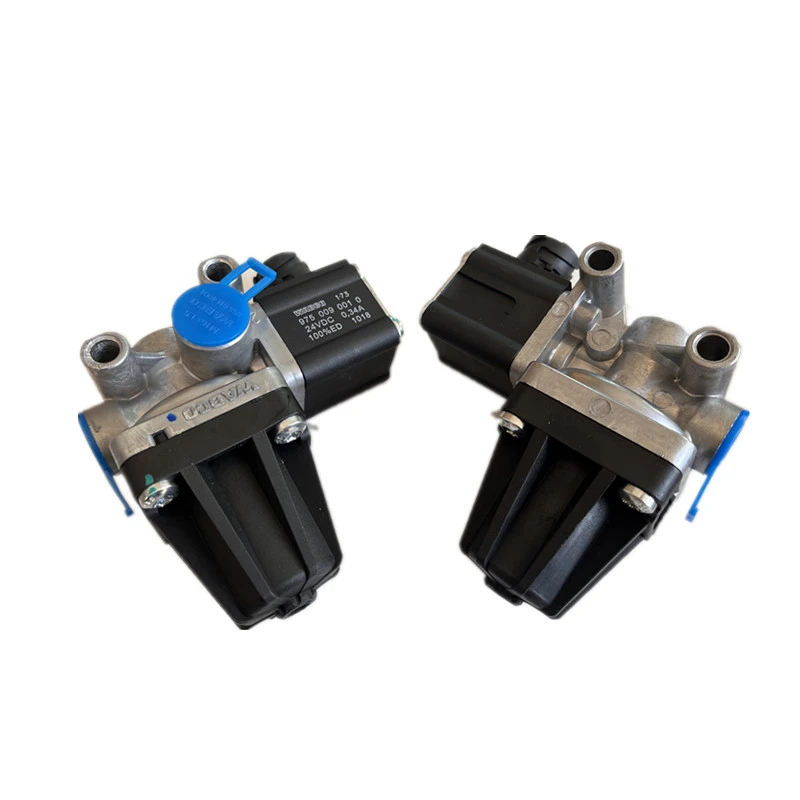
At the heart of an AMT's operation, and indeed in modern fully automatic transmissions, is the 변속기 솔레노이드 밸브. These small but mighty components are the actuators that make automatic shifting possible. A solenoid is essentially an electromagnet: a coil of wire that, when energized with an electric current, creates a magnetic field that moves a plunger or piston.
Inside the transmission's valve body, a labyrinth of passages directs pressurized hydraulic fluid (transmission fluid). The transmission solenoid valve acts as an electronically controlled gate. The TCU sends a precise electrical signal to a specific solenoid, causing it to open or close. This action directs the flow of hydraulic fluid to engage or disengage a particular clutch pack or shift fork, which in turn selects the desired gear.
There are several types of solenoids in a modern transmission, including shift solenoids, pressure control solenoids, and torque converter clutch solenoids. When one of these fails, it can lead to a host of problems, such as harsh shifting, getting stuck in a gear, or a complete loss of drive. Diagnosing a faulty transmission solenoid valve often requires specialized tools to read error codes from the TCU, but the symptoms are often a clear indicator that the "brain" of the gearbox is having trouble communicating with its "muscles." When seeking replacements, it is important to source from a reputable supplier that offers high-quality transmission solenoid valves.
Clutches and Torque Converters
In a manual transmission or AMT, the clutch is the mechanical link between the engine and the transmission. It allows the driver (or the computer) to temporarily disconnect the engine's power to allow for a smooth gear change. It consists of a pressure plate, a clutch disc, and a release bearing. Over time, the friction material on the clutch disc wears down and requires replacement.
In a fully automatic transmission (less common in Class 8 trucks but prevalent in smaller commercial vehicles), a torque converter is used instead of a clutch. A torque converter is a fluid coupling that uses transmission fluid to transfer power from the engine to the transmission. It allows the engine to idle while the vehicle is stopped without stalling and provides a degree of torque multiplication at low speeds, which gives a smooth takeoff.
The Brake System: The Unwavering Guardian of Safety
While the engine and transmission are responsible for making the truck go, the brake system is charged with the even more important task of making it stop. A fully loaded semi-truck can weigh up to 80,000 pounds (or more, depending on local regulations), and bringing that much mass to a halt requires a braking system of immense power and reliability. The vast majority of heavy-duty trucks use an air brake system, which relies on compressed air to actuate the brakes at each wheel.
Air Brake System Fundamentals
Why use air instead of the hydraulic fluid found in passenger cars? The primary reasons are power and safety. Air can be compressed and stored in large quantities in reservoirs (tanks), providing a ready supply of energy to apply massive force to the brakes. Critically, the system is designed to be fail-safe. If a leak occurs, the loss of air pressure will cause the spring brakes to engage automatically, bringing the vehicle to a stop. This is the opposite of a hydraulic system, where a leak results in a total loss of braking ability.
The system starts with an engine-driven air compressor, which pumps air into the storage tanks. An air dryer removes moisture and other contaminants from the air to prevent freeze-ups in cold weather and corrosion within the system (Handel, 2023). When the driver presses the brake pedal (called a treadle valve), it sends a signal of compressed air through a network of lines and valves to the brake chambers at each wheel, applying the brakes.
Command and Control: The Hand Brake Valve
In addition to the service brakes operated by the foot pedal, trucks have a parking/emergency brake system. This is controlled by the 핸드 브레이크 밸브, which is typically a yellow, diamond-shaped knob on the dashboard. When the driver pulls this knob out, it releases the air pressure from the spring brake chambers. This allows powerful internal springs to mechanically apply the brakes, holding the truck securely in place. Pushing the knob in supplies air pressure to the spring brake chambers, compressing the springs and releasing the brakes.
The hand brake valve also controls the trailer brakes, often via a separate red, octagonal knob. Drivers can use the trailer hand valve (sometimes called a trolley valve or Johnson bar) to apply the trailer brakes independently of the tractor brakes. This technique can be useful for correcting a trailer sway or for testing the brake connection. The proper function of the hand brake valve is an absolute necessity for safe operation, as it is the primary means of securing the vehicle when parked and serves as a secondary emergency braking system.
Air Dryers and Compressors: Ensuring System Integrity
As mentioned, the air compressor is the source of power for the brake system. It is typically a single or twin-cylinder piston-style pump driven by the engine's gear train. A governor controls the compressor, cycling it on and off to maintain the air pressure in the reservoirs within a preset range, usually between 100 and 130 PSI.
The air produced by the compressor contains moisture from the atmosphere, as well as tiny amounts of oil from the compressor's own lubrication. If this mixture were allowed to enter the brake system, it would cause significant problems. In cold weather, the moisture could freeze in the air lines and valves, rendering the brakes inoperable. Over time, the water and oil would corrode the metal components from the inside out.
To prevent this, the compressed air is routed through an air dryer. The air dryer contains a desiccant material, similar to the silica gel packets found in new shoes, which absorbs moisture (Handel, 2023). The dryer also has filters to remove oil and other particulates. After the compressor cycles off, the dryer performs a "purge" cycle, using a blast of air from a dedicated small reservoir to blow the collected moisture and contaminants out into the atmosphere. Regular maintenance of the air dryer, including changing the desiccant cartridge, is a vital part of keeping the entire air brake system healthy.
Foundation Brakes: Drums, Discs, and Slack Adjusters
The final components in the system are the foundation brakes—the mechanical parts at the wheels that do the actual work of creating friction.
| Brake Type | Description | Common Application |
|---|---|---|
| S-Cam Drum Brakes | A rotating S-shaped cam pushes brake shoes outward against the inside of a brake drum. | Most common type on heavy-duty trucks and trailers. |
| Wedge Brakes | A wedge is forced between two rollers, pushing the brake shoes outward. | Less common, found on some older or specialized vehicles. |
| Air Disc Brakes | A caliper uses air pressure to squeeze brake pads against a large rotor (disc). | Increasingly popular on new trucks for superior performance and fade resistance. |
In S-cam drum brake systems, a pushrod extends from the brake chamber and connects to a slack adjuster. When air enters the chamber, the pushrod moves the slack adjuster, which rotates the S-cam and applies the brakes. The slack adjuster is a lever that also provides a way to compensate for brake lining wear. Older systems used manual slack adjusters that required periodic manual adjustment, but modern trucks are equipped with automatic slack adjusters that self-adjust to maintain the proper clearance between the brake shoes and the drum.
The Chassis and Suspension System: The Supportive Skeleton
If the engine is the heart and the electrical system is the nervous system, then the chassis and suspension are the skeleton and muscles. This framework provides the structural integrity of the vehicle, supports the immense weight of the truck and its cargo, and works to isolate the cab and freight from the harshness of the road. A deep dive into the question of "what are the different types of truck parts" must include this foundational system.
The Frame: The Backbone of the Truck
The frame, or chassis, is the primary structure of the truck. It is typically a ladder-style frame, consisting of two long, heavy-gauge steel rails running the length of the vehicle, connected by a series of crossmembers. Everything else—the engine, transmission, cab, axles, and cargo body—is mounted to this frame. The design of a truck frame is a balance between strength and flexibility. It must be strong enough to resist bending and twisting under load, but it also needs a degree of torsional flex to allow the suspension to articulate over uneven terrain without placing undue stress on the frame itself.
Axles, Wheels, and Tires
The axles are the components that connect the wheels to the frame and support the vehicle's weight. A typical tractor unit has a front steer axle and one or two rear drive axles (known as a tandem axle). The drive axles contain the differential, which allows the wheels on either side to rotate at different speeds when turning a corner.
The wheels and tires are the truck's only point of contact with the road. Truck tires are highly specialized, designed to carry heavy loads, resist wear over long distances, and provide traction in various weather conditions. A typical tractor-trailer has 18 wheels, and maintaining proper tire pressure and tread depth on all of them is a constant and vital task for safety and fuel efficiency.
Suspension Components: Springs, Shock Absorbers, and Air Bags
The suspension system's job is twofold: to support the vehicle's weight and to absorb shocks from the road surface, providing a smoother ride and protecting the vehicle and its cargo.
In the past, heavy-duty trucks used heavy steel leaf spring suspensions on all axles. A leaf spring is made of a series of long, flat steel plates stacked on top of each other. While simple and durable, leaf springs provide a notoriously harsh ride, especially when the truck is unloaded.
Today, while the front steer axle may still use leaf springs, the drive axles and trailer axles almost universally use an air-ride suspension. In this system, the weight is supported by large, durable rubber bellows, or air bags, instead of steel springs. An intricate system of valves maintains a constant ride height by adding or releasing air from the bags as the load changes. Air suspension provides a significantly better ride, superior load protection, and the ability to adjust the vehicle's height for easier loading and unloading.
Regardless of the spring type, shock absorbers are used to dampen the oscillations of the suspension. Without shock absorbers, the truck would continue to bounce up and down long after hitting a bump. A shock absorber is a hydraulic piston that forces oil through small orifices, converting the kinetic energy of the suspension movement into heat, thus calming the ride.
The HVAC System: Maintaining Cabin Comfort and Driver Focus
Long-haul trucking involves spending countless hours in the cab, which serves as both an office and a temporary home. Maintaining a comfortable and safe cabin environment is not a luxury; it is a necessity for driver alertness, health, and retention. The Heating, Ventilation, and Air Conditioning (HVAC) system is responsible for this climate control. While it might seem secondary to the systems that make the truck move, a failure in the HVAC system during extreme weather can be a mission-ending event.
Core Climate Control Components
The HVAC system in a truck operates on the same basic principles as the one in a passenger car, but its components are generally larger and more robust to handle the larger volume of the cab and sleeper compartment. The system consists of two main circuits: a heating circuit and a cooling (air conditioning) circuit.
The heating circuit borrows heat from the engine's cooling system. Hot coolant from the engine is circulated through a small radiator called a heater core, which is located inside the HVAC unit under the dashboard. A fan blows air across the heater core, warming it before it enters the cabin.
The air conditioning circuit is more complex and works like a refrigerator. It uses a refrigerant that changes between a liquid and a gas to move heat from inside the cab to the outside. The key components include [fitzgeraldtruckparts.com]:
- Compressor: An engine-driven pump that pressurizes the refrigerant gas, also raising its temperature.
- Condenser: Located in front of the engine's radiator, it allows the high-pressure, hot refrigerant gas to release its heat to the outside air, causing it to condense into a liquid.
- Receiver/Dryer or Accumulator: Removes moisture from the refrigerant and ensures a steady flow of liquid to the expansion valve.
- Expansion Valve or Orifice Tube: A small nozzle that the high-pressure liquid refrigerant is forced through. This causes a rapid drop in pressure, making the refrigerant extremely cold.
- Evaporator: Located inside the HVAC unit, this is where the magic happens. The cold, low-pressure refrigerant absorbs heat from the cabin air being blown across it, causing the refrigerant to boil back into a gas. The now-cool air is directed into the cab.
The Power of Air Movement: The Truck Blower Motor
None of the heating or cooling would do any good if the conditioned air couldn't be circulated throughout the cab. This is the job of the 트럭 블로어 모터. The blower motor is a simple but powerful electric motor with a fan attached (often called a "squirrel cage"). It is typically located within the HVAC housing under the dashboard. The driver controls the speed of the truck blower motor via a switch on the dash, which sends current through a series of resistors to vary the motor's speed.
A common failure point is the blower motor resistor pack. When it fails, the blower motor might only work on the highest speed setting, as this setting bypasses the resistor entirely. If the motor doesn't work at all, the issue could be the motor itself, the switch, or a blown fuse. In a large truck cab, especially one with a sleeper berth, having a functional truck blower motor is absolutely key to distributing warm or cool air effectively and keeping the windows clear of fog.
The Electrical and Electronic System: The Nervous System
If the engine is the heart, the electrical and electronic systems are the truck's brain and central nervous system. In a modern truck from 2025, these systems are more complex and integral to operation than ever before. They control everything from starting the engine to managing fuel injection, operating the lights, and providing data to the driver. Understanding what are the different types of truck parts in this category is key to diagnosing modern vehicle issues.
Batteries, Alternators, and Starters
This is the foundation of the electrical system. Heavy-duty trucks typically use a 12-volt system, but they use multiple batteries wired in parallel to provide the immense cranking amperage needed to turn over a large, high-compression diesel engine, especially in cold weather. A bank of three or four Group 31 batteries is common.
Once the engine is running, the alternator takes over. The alternator is an engine-driven generator that produces electrical current to power all the vehicle's systems and to recharge the batteries.
The starter is a powerful electric motor that engages with a gear on the engine's flywheel, rotating the engine until it can start and run on its own. A failing starter or weak batteries are common causes of a no-start condition.
The Engine Control Unit (ECU) and Sensor Network
The Engine Control Unit (ECU), also known as the Engine Control Module (ECM), is the master computer for the powertrain. It is a powerful microprocessor that receives input from dozens of sensors all over the engine and truck. These sensors monitor parameters like engine speed, coolant temperature, oil pressure, intake air temperature, turbo boost pressure, the position of the accelerator pedal, and the data from the air flow meter.
Based on this flood of real-time data, the ECU makes thousands of calculations per second to precisely control the fuel injectors, the VGT turbocharger's vanes, the EGR valve, and other actuators. This constant adjustment optimizes performance, maximizes fuel efficiency, and minimizes emissions. The ECU is connected to other control units on the vehicle, such as the Transmission Control Unit (TCU) and the Brake Control Unit (for ABS), via a Controller Area Network (CAN-bus), allowing all the systems to communicate and work together seamlessly.
Lighting and Instrumentation
The electrical system powers all exterior and interior lighting, from the headlights and brake lights required by law to the cabin dome lights and sleeper berth reading lamps. Modern trucks increasingly use LED lighting technology, which is more durable, longer-lasting, and consumes less power than traditional incandescent bulbs.
The instrument cluster in front of the driver is also part of this system. While older trucks used purely mechanical gauges, modern dashboards are a mix of analog-style electronic gauges and digital display screens. These displays provide the driver with a wealth of information, from basic speed and RPM to real-time fuel economy data, trip information, and diagnostic fault codes reported by the ECU.
The Emissions Control System: A Modern Mandate
In response to increasingly strict environmental regulations around the globe, modern diesel engines are equipped with highly sophisticated aftertreatment systems to reduce harmful emissions. These systems are complex, expensive, and require regular maintenance, but they have made today's diesel trucks remarkably clean compared to their predecessors.
Exhaust Gas Recirculation (EGR)
One of the primary pollutants from diesel combustion is Nitrogen Oxides (NOx), which are formed at very high temperatures. The Exhaust Gas Recirculation (EGR) system is designed to reduce the formation of NOx. It does this by routing a small amount of cooled exhaust gas back into the engine's intake to be mixed with the fresh air.
This inert exhaust gas displaces some of the oxygen in the combustion chamber, which lowers the peak combustion temperature. Lower temperatures mean significantly less NOx is formed in the first place. The flow of this gas is controlled by an EGR valve, which is commanded by the ECU. While effective, EGR systems can be prone to issues with soot buildup, which can cause the valve or the EGR cooler to become clogged.
Diesel Particulate Filters (DPF) and Selective Catalytic Reduction (SCR)
The two other main pollutants are particulate matter (soot) and any remaining NOx. These are handled by the aftertreatment system, which is located in the exhaust stream, often housed in a large unit called the "one-box."
-
Diesel Particulate Filter (DPF): This is a ceramic wall-flow filter designed to trap soot. As exhaust flows through the DPF, the soot is captured, and the clean gas exits. Over time, the filter fills with soot and must be cleaned. The truck does this automatically through a process called regeneration ("regen"), where the DPF is heated to over 1000°F (538°C) to burn the soot off, turning it into a fine ash. This ash eventually builds up and requires the DPF to be professionally cleaned or replaced. A clean and functional durable truck exhaust pipes system is essential for the DPF to work correctly.
-
Selective Catalytic Reduction (SCR): This system targets the remaining NOx. Diesel Exhaust Fluid (DEF), a solution of urea and de-ionized water, is injected into the hot exhaust stream ahead of the SCR catalyst. The heat converts the urea into ammonia. Inside the SCR catalyst, the ammonia reacts with the NOx, converting it into harmless nitrogen gas and water vapor. Running out of DEF will cause the ECU to severely derate the engine's power, forcing the driver to refill.
The Function of PCV Valves
A less discussed but still important part of emissions and engine health is the Positive Crankcase Ventilation (PCV) system. During combustion, a small amount of gas inevitably leaks past the piston rings into the engine's crankcase. This is called "blow-by." These gases contain unburnt fuel and combustion byproducts that, if left in the crankcase, would contaminate the oil and build up pressure, potentially forcing oil out past seals and gaskets.
The PCV system reroutes these gases from the crankcase back into the intake manifold so they can be burned in the engine (Pedal Commander, 2025). The flow is controlled by a PCV valve. It's a simple, one-way valve that regulates how much of these gases are drawn out of the crankcase based on engine vacuum. A clogged PCV valve can lead to pressure buildup and oil leaks, while one that is stuck open can cause a vacuum leak and poor engine performance. Though a small part, its role in maintaining engine cleanliness and controlling emissions is significant (Pedal Commander, 2025).
자주 묻는 질문(FAQ)
What are the most common truck parts that need replacement?
The most frequently replaced parts are those subject to wear and tear. This includes tires, brakes (pads, shoes, drums), clutches, belts, hoses, and filters (oil, fuel, air, DPF). Components in the suspension system like shock absorbers and air bags also have a finite lifespan.
How can I tell if my truck's air flow meter is failing?
Symptoms of a failing air flow meter include a noticeable loss of power, poor fuel economy, rough idling, hesitation during acceleration, and the check engine light illuminating. The engine may also produce black smoke from the exhaust due to an incorrect air-fuel mixture.
Is a faulty transmission solenoid valve expensive to fix?
The cost can vary greatly. The solenoid valve itself might not be extremely expensive, but the labor to access it can be significant. The valve is located inside the transmission's valve body, which may require removing the transmission pan and fluid. In some cases, the valve body itself must be removed, making it a job for a professional technician.
What is the primary purpose of a hand brake valve in a truck?
The hand brake valve's primary purpose is to apply and release the parking brakes. When you pull the knob out, it releases air pressure, allowing powerful springs to mechanically apply the brakes on the drive and trailer axles, securing the parked vehicle. It also serves as an emergency brake system in case of a service brake failure.
Why is my truck's blower motor only working on the highest speed?
This is a classic symptom of a failed blower motor resistor. The resistor pack is used to control the fan speed by varying the electrical resistance. The highest speed setting typically bypasses this resistor and sends full voltage directly to the motor. When the resistor fails, only the high-speed setting will function.
How does a truck's exhaust system affect performance?
The exhaust system, including the truck exhaust pipe, is crucial for performance. A properly designed system efficiently removes exhaust gases, allowing the engine to breathe better. A restriction, such as a clogged DPF or a crushed pipe, creates backpressure that chokes the engine and reduces power. For turbocharged engines, the exhaust flow is what drives the turbo, so any leaks or restrictions before the turbo will directly impact boost and performance.
What causes a turbocharger to fail?
According to experts, the most common causes of turbocharger failure are related to the engine's oil: oil contamination, oil starvation, or improper engine shutdown (Espiritu, 2025). Dirty oil can damage the high-speed bearings, while a lack of oil will cause them to seize. Shutting down a hot engine immediately can "coke" the oil in the turbo, leading to deposits that cause damage.
결론
A heavy-duty truck is a testament to human ingenuity, an intricate ecosystem where mechanical, hydraulic, pneumatic, and electronic systems must work in perfect harmony. From the raw power generated in the engine's cylinders to the precise electronic commands of a transmission solenoid valve, every part has a purpose. Understanding the different types of truck parts is not merely an academic exercise; it is the foundation of effective maintenance, timely repair, and safe operation. The air flow meter ensuring clean combustion, the hand brake valve securing tons of steel on a grade, the truck blower motor providing a livable environment for the driver, and the truck exhaust pipe guiding the final byproducts of this complex process—each component plays its role. By appreciating the function of these individual parts and the systems they form, we gain a deeper respect for the machines that form the backbone of our global economy and the knowledge to keep them running reliably for the millions of miles that lie ahead.
참조
Baghouse America. (2022, August 25). Exploring the functionality of solenoid and diaphragm valves. Baghouse America. Retrieved from
Espiritu, Z. (2025, October 23). Everything you need to know about your truck turbocharger. Autostar Heavy Duty. Retrieved from https://autostarheavyduty.com/truck-turbocharger-guide-heavy-duty-performance/
Fitzgerald Truck Parts. (2025). Heating & AC. Retrieved from
Handel, J. (2023, June 5). Getting to know your air system: Air dryers. JIT Truck Parts. Retrieved from https://www.jittruckparts.com/blog/getting-to-know-your-semi-truck-air-dryer
Pedal Commander. (2025, February 25). Ultimate guide to PCV valve: From function to troubleshooting. Pedal Commander Blog. Retrieved from https://pedalcommander.com/blogs/garage/ultimate-guide-to-pcv-valve
Triple R Truck Parts. (2025). Drain valves. Retrieved from