



An Expert Guide to the 5 Core Systems: What are the main components of a truck
diciembre 24, 2025
Abstract
This article provides an exhaustive examination of the primary systems that constitute a modern heavy-duty truck. It deconstructs the vehicle into five core functional groups: the engine, the drivetrain, the chassis and suspension, the braking and air system, and the cab with its associated controls. Each section offers a detailed analysis of its respective components, elucidating their specific functions, interdependencies, and operational principles. The discussion extends beyond mere identification to explore the underlying engineering concepts, such as forced induction via turbochargers, torque multiplication within the transmission, and the pneumatic logic of air brake systems. Emphasis is placed on the roles of critical sub-components like the transmission solenoid valve, air flow meter, hand brake valve, and truck blower motor. The objective is to furnish a comprehensive educational resource that bridges the gap between superficial knowledge and a deep, functional understanding of what the main components of a truck are and how they synergize to create a powerful and reliable machine.
Key Takeaways
- The engine is the truck's powerhouse, relying on precise combustion and cooling systems.
- The drivetrain, including the transmission, translates engine power into road movement.
- A truck's chassis provides the foundational structure, supporting all other systems.
- Air brakes are a critical safety feature, using compressed air for immense stopping power.
- Understanding what the main components of a truck are is vital for maintenance and safety.
- The cab is the driver's command center, integrating controls, comfort, and visibility.
- Modern trucks use complex electronics like the ECM to manage performance and emissions.
Table of Contents
- A Deeper Look: The Interconnected Systems of a Heavy-Duty Truck
- System 1: The Engine – The Heart of the Haul
- System 2: The Drivetrain – Transferring Power to the Pavement
- System 3: The Chassis and Suspension – The Backbone and Ride
- System 4: The Braking and Air System – The Power to Stop
- System 5: The Cab, Controls, and Body – The Command Center
- Frequently Asked Questions (FAQ)
- A Final Perspective on Integrated Systems
- References
A Deeper Look: The Interconnected Systems of a Heavy-Duty Truck
When we gaze upon a heavy-duty truck, it is easy to see it as a single, monolithic entity designed for the singular purpose of hauling cargo. Yet, such a view, while practical, obscures the profound complexity and elegance of its design. To truly comprehend this machine, we must approach it as a biologist might approach a complex organism—not as a single object, but as a collection of deeply integrated systems, each with its own purpose, yet all working in a delicate, powerful harmony. Thinking about what are the main components of a truck is the first step on a journey from being a mere observer to becoming an informed operator or technician.
Imagine for a moment a symphony orchestra. Each section—the strings, the brass, the woodwinds, the percussion—is a master of its own sound. A lone violin can be beautiful, a trumpet call can be stirring. But it is only when the conductor brings them all together, following the intricate score, that they create a symphony. A heavy-duty truck is much the same. The engine is the thunderous percussion section, generating raw power. The drivetrain is the string section, translating that power into fluid motion. The chassis is the stage itself, supporting everyone. The braking system is the disciplined silence between notes, providing control and safety. And the cab is the conductor's podium, from which the entire performance is directed.
In this guide, we will move beyond a simple list of parts. We will embark on a thoughtful exploration of these core systems. We will deconstruct them, piece by piece, to understand not just what they are, but how they function and, most importantly, why they are designed the way they are. From the microscopic precision of a fuel injector to the immense structural strength of the frame, we will uncover the engineering principles that allow these vehicles to perform their monumental tasks. This exploration is not merely academic; it is the foundation of safe operation, effective maintenance, and intelligent troubleshooting. Understanding what the main components of a truck are is to understand the language the vehicle speaks, allowing you to listen for the subtle signs of health or distress.
System 1: The Engine – The Heart of the Haul
The engine is, without question, the heart of the truck. It is the source of all motive power, a marvel of controlled explosions converting chemical energy in fuel into the mechanical force that moves tons of weight across vast distances. To understand what the main components of a truck are, we must begin here, in this powerhouse. A modern diesel truck engine is not a simple brute; it is a highly sophisticated and efficient system, governed by computers and built with incredible precision.
The Core Structure: Block, Head, and Internals
At the very foundation of the engine lies the cylinder block. You can think of this as the engine's torso. It is a massive, incredibly strong casting of iron or aluminum that houses the cylinders—the chambers where the magic of combustion happens (Wallwork Truck Center, 2025). Within these cylinders, pistons travel up and down with tremendous force. These pistons are connected to the crankshaft by connecting rods.
Here is a simple way to visualize this relationship: imagine riding a bicycle. Your legs are the connecting rods, the pedals are part of the crankshaft, and the force you exert on the pedals is like the force of combustion pushing the piston down. The linear, up-and-down motion of your legs is converted into the rotational motion of the pedals and sprocket. The crankshaft does precisely this, converting the reciprocating motion of the pistons into the rotational force that will eventually turn the truck's wheels.
Sealing the top of the cylinder block is the cylinder head. This isn't just a simple lid; it's an incredibly complex component in its own right. The cylinder head forms the top of the combustion chamber and contains the valves, fuel injectors, and, in many modern designs, the camshafts. The seal between the block and the head, maintained by a head gasket, is critical. It must contain the immense pressures of combustion, which can exceed 2,500 psi, while also allowing coolant and oil to pass between the two components through dedicated channels.
The Breathing Apparatus: Valvetrain and Camshaft
An engine needs to "breathe" just like any living creature. It must draw in fresh air for combustion and expel the resulting exhaust gases. This process is managed by the valvetrain. The system consists of intake and exhaust valves for each cylinder, which are opened and closed at precisely the right moments by the camshaft.
The camshaft is a shaft with egg-shaped lobes along its length. As it rotates, these lobes push on a series of components (like lifters, pushrods, and rocker arms) that, in turn, open the valves. The camshaft's rotation is perfectly synchronized with the crankshaft, typically at half the crankshaft's speed. This precise timing is non-negotiable. If an intake valve opens at the wrong time, the engine won't get enough air. If an exhaust valve doesn't close properly, the engine will lose compression and power. The entire symphony of the engine depends on the camshaft acting as its unerring metronome.
Fuel and Fire: The Injection System
In a diesel engine, there is no spark plug as you would find in a gasoline car. Instead, combustion is achieved through compression. Air is drawn into the cylinder and compressed so intensely by the piston that its temperature skyrockets to over 1,000°F (540°C). At the exact moment of peak compression, a fuel injector sprays a fine, atomized mist of diesel fuel into this superheated air. The fuel ignites instantly and powerfully, driving the piston down and turning the crankshaft.
Modern diesel fuel injectors are masterpieces of engineering. They are controlled electronically by the Engine Control Module (ECM) and can deliver fuel at pressures exceeding 30,000 psi. This high pressure is necessary to atomize the fuel into microscopic droplets, which ensures it mixes thoroughly with the air for a clean, complete, and powerful combustion event. The timing and duration of this injection event are controlled with microsecond precision.
Forced Induction: The Role of the Turbocharger
A naturally aspirated engine relies on atmospheric pressure to push air into the cylinders. A heavy-duty truck engine, however, needs far more air than that to generate the power required for hauling. This is where the turbocharger comes in. A turbocharger is a fascinating device that uses the engine's own exhaust gas—energy that would otherwise be wasted—to force more air into the combustion chambers (AutoStar Heavy Duty, 2025).
It consists of two main sections connected by a shaft: a turbine and a compressor. Hot exhaust gas leaving the engine spins the turbine. This spinning turbine, in turn, spins the compressor wheel, which is located in the engine's air intake system. The compressor sucks in fresh air, pressurizes it (creating "boost"), and forces this dense, oxygen-rich air into the cylinders. With more oxygen, the engine can burn more fuel, and burning more fuel creates more power. It's a brilliant cycle of recycling waste energy. A key part of this system is the caudalímetro de aire, which measures the mass of air entering the engine. The ECM uses the data from the air flow meter to calculate the precise amount of fuel to inject, optimizing the air-fuel ratio for both power and efficiency.
Many modern trucks use a Variable Geometry Turbo (VGT). A VGT has movable vanes inside the turbine housing that can change the exhaust gas flow characteristics. At low engine speeds, the vanes close up to increase exhaust velocity, spinning the turbo up quickly and reducing "turbo lag." At high engine speeds, the vanes open to allow for maximum flow, preventing the turbo from over-speeding and choking the engine (AutoStar Heavy Duty, 2025).
The Lifeblood: Lubrication and Cooling Systems
With all the intense heat and high-speed moving parts, an engine would destroy itself in seconds without proper lubrication and cooling.
En lubrication system is the engine's circulatory system. An oil pump, typically driven by the crankshaft, draws oil from the oil pan (the reservoir at the bottom of the engine) and forces it under pressure through a network of passages. This oil forms a protective film between moving parts, such as the crankshaft bearings and the cylinder walls, preventing metal-on-metal contact and reducing friction. The oil also plays a vital role in cooling, carrying heat away from hot components like the underside of the pistons. An oil filter is essential to this system, removing contaminants that could damage the engine's delicate internal surfaces (Van Horn Truck Parts, 2025).
En cooling system manages the immense heat generated by combustion. A water pump circulates a mixture of water and antifreeze, known as coolant, through passages in the cylinder block and head. The coolant absorbs heat from the engine and then flows to the radiator at the front of the truck. Air flowing through the radiator (aided by a large engine-driven fan) removes the heat from the coolant, which then cycles back to the engine to absorb more heat. A thermostat acts as a valve in this system, controlling coolant flow to ensure the engine warms up quickly and maintains a consistent optimal operating temperature.
The Brains of the Operation: The Engine Control Module (ECM)
If the engine is the heart, the Engine Control Module (ECM) is the brain. This powerful onboard computer is the master controller for nearly all engine functions. It receives data from a vast network of sensors, including:
- En caudalímetro de aire (measuring incoming air)
- Crankshaft and camshaft position sensors (measuring engine speed and timing)
- Coolant temperature sensors
- Exhaust gas oxygen sensors
- Accelerator pedal position sensor
The ECM processes this information thousands of times per second and makes real-time adjustments to optimize performance, fuel economy, and emissions. It controls fuel injection timing and duration, turbocharger boost pressure, and the operation of the emissions aftertreatment system. It is the unseen conductor ensuring every part of the engine orchestra plays in perfect harmony. Understanding what the main components of a truck are requires an appreciation for this central processing unit that governs their interactions.
System 2: The Drivetrain – Transferring Power to the Pavement
Having a powerful engine is one thing; getting that power to the wheels to move the truck is another challenge entirely. This is the job of the drivetrain. The drivetrain is the series of components that transmits the rotational energy from the engine's crankshaft to the drive wheels. It's a system of torque management and multiplication, allowing a truck to start moving a massive load from a standstill and also cruise efficiently at highway speeds. A core part of understanding what the main components of a truck are involves tracing this flow of power.
The Clutch and Torque Converter: The Engine's Handshake
The first step in the drivetrain is to provide a way to connect and disconnect the engine from the rest of the system. You need to be able to stop the truck without stalling the engine, and you need to be able to change gears.
In a truck with a manual transmission, this is accomplished by the clutch. The clutch is essentially a large friction disc sandwiched between the engine's flywheel and the transmission's input shaft. When you press the clutch pedal, the pressure is released, and the disc disengages, breaking the connection between the engine and transmission. When you release the pedal, springs clamp the disc tightly, and power is transferred.
In a truck with an automatic or automated manual transmission (AMT), the job is done by a torque converter. A torque converter is a fluid coupling. It looks a bit like a doughnut and is filled with transmission fluid. It has two main parts: an impeller connected to the engine and a turbine connected to the transmission. As the engine spins the impeller, it flings fluid outwards, which then strikes the blades of the turbine, causing it to spin. This fluid connection allows for some slip, which is why you can be stopped in "Drive" without the engine stalling. At higher speeds, many torque converters have a "lock-up" mechanism that creates a direct mechanical link to improve efficiency.
The Transmission: The Art of Torque Multiplication
En transmission is arguably the most complex component of the drivetrain. Its primary job is to manage the trade-off between torque (twisting force) and speed. Think about riding a 10-speed bicycle again. To start moving from a stop, especially on a hill, you use a low gear. It's easy to pedal, but you don't go very fast. This is a high-torque, low-speed setting. Once you're moving, you shift to higher gears. Pedaling becomes harder, but for each turn of the pedals, you travel a much greater distance. This is a low-torque, high-speed setting.
A truck's transmission does exactly the same thing, but on a much larger scale. It is a box full of gears of different sizes. By selecting different combinations of these gears, the driver (or the computer) can change the gear ratio.
- Low gears (like 1st gear) multiply the engine's torque significantly, allowing the truck to overcome inertia and start moving a heavy load.
- High gears (like 10th or 18th gear) allow the engine to run at a relatively low, efficient RPM while the truck travels at highway speed.
In modern automatic and automated manual transmissions, the shifting process is controlled by the Transmission Control Module (TCM). The TCM uses a series of electronic solenoids to direct hydraulic fluid, which engages and disengages different gearsets. A critical component here is the electroválvula de transmisión. This valve is an electromechanical device that the TCM opens and closes to control the flow of transmission fluid to the clutches and bands that select the gears. The precise and rapid action of a high-quality transmission solenoid valve is what allows for the smooth, almost seamless shifts of a modern automatic truck. A malfunctioning electroválvula de transmisión can lead to harsh shifting, getting stuck in gear, or a complete loss of power transfer.
| Característica | Manual Transmission | Automated Manual Transmission (AMT) |
|---|---|---|
| Driver Input | Driver uses a clutch pedal and a shift lever. | Driver selects a mode (e.g., Drive); the computer handles all shifting. |
| Internal Mechanics | Mechanical gears, shafts, and synchronizers. | Similar to a manual, but with computer-controlled pneumatic or electric actuators. |
| Clutch | Driver-operated foot pedal. | Computer-controlled, automated engagement and disengagement. |
| Key Components | Clutch disc, pressure plate, shift forks. | TCM, shift actuators, electroválvula de transmisión clusters. |
| Efficiency | Highly efficient, but depends on driver skill. | Often more efficient as the computer optimizes every shift for fuel economy. |
| Driver Fatigue | Can be high in stop-and-go traffic. | Significantly lower, as there is no clutch pedal to operate. |
The Driveshaft and Axles: The Final Link
Once the power leaves the transmission, it needs to travel to the rear of the truck to the drive wheels. This is the job of the driveshaft (or propeller shaft). The driveshaft is a long, hollow steel or aluminum tube that connects the transmission's output shaft to the rear axle assembly. It must be strong enough to handle immense torque but also perfectly balanced to avoid vibration at high speeds. It is fitted with universal joints (U-joints) at each end, which allow it to transmit power even as the rear axle moves up and down with the suspension.
The driveshaft delivers power to the rear axle, which contains the differential. The differential is a clever set of gears that performs two crucial jobs. First, it turns the direction of the power by 90 degrees, from the longitudinal rotation of the driveshaft to the transverse rotation of the axles that go out to the wheels. Second, and more subtly, it allows the wheels on the left and right sides to rotate at different speeds. Why is this necessary? When a truck makes a turn, the outside wheel has to travel a longer distance than the inside wheel. The differential allows this to happen smoothly, preventing the tires from scrubbing and the drivetrain from binding up. From the differential, solid steel axle shafts transmit the final power to the wheels.
System 3: The Chassis and Suspension – The Backbone and Ride
If the engine is the heart and the drivetrain is the muscle, then the chassis and suspension are the skeleton and connective tissues. This system provides the fundamental structure that everything else is built upon, supports the immense weight of the cargo, and isolates the truck and its contents from the harshness of the road. Analyzing these elements is fundamental to understanding what the main components of a truck are.
The Frame: The Structural Skeleton
En chassis frame is the literal backbone of the truck. It is typically a ladder-style frame, consisting of two long, heavy-gauge steel C-channel rails running the length of the vehicle. These rails are connected by a series of perpendicular crossmembers. This simple-looking structure is engineered to be incredibly strong and rigid, yet also possess a calculated amount of flex. It has to support the weight of the cab, engine, transmission, fuel tanks, and, most importantly, the cargo load transmitted through the fifth wheel or truck bed.
Every other component of the truck bolts to this frame. The engine mounts, the transmission support, the cab mounts, the suspension hangers, the fifth wheel assembly—all find their home on these two steel rails. The design of the frame is a careful balance between strength to prevent bending under load and torsional flexibility to allow the truck to navigate uneven terrain without lifting wheels off the ground or placing undue stress on the structure.
The Suspension System: Supporting the Load and Smoothing the Ride
En suspension system has a dual personality. Its first job is to support the massive weight of the truck and its cargo. Its second job is to absorb shocks from bumps, potholes, and uneven road surfaces to provide a stable, controlled ride.
Traditionally, heavy trucks have used leaf spring suspensions. These are made of multiple layers of long, curved steel plates stacked on top of each other. They are simple, incredibly strong, and effective at handling very heavy loads (Wallwork Truck Center, 2025). One end is attached to the frame, the other end is attached to a shackle that allows for movement, and the axle is bolted to the center of the spring pack.
However, an increasingly popular option, especially for on-highway tractors, is the air spring or airbag suspension. Instead of steel springs, this system uses durable, inflatable rubber bags mounted between the frame and the axle. The primary advantage of an air suspension is its superior ride quality and its ability to maintain a constant ride height. A valve system, controlled electronically or mechanically, automatically adds or removes air from the bags to compensate for changes in load. This keeps the truck and trailer level, which is critical for aerodynamics, headlight aim, and fifth-wheel connection height.
Working in tandem with the springs are shock absorbers. Springs absorb the initial impact from a bump, but they have a tendency to oscillate or bounce. A shock absorber is a hydraulic damper that resists this bouncing motion, keeping the tires firmly planted on the road. This is vital for stability, handling, and braking performance. A collection of control arms, radius rodsy torque rods are also used to keep the axles located correctly under the truck, preventing them from moving forward, backward, or side-to-side.
The Fifth Wheel: The Critical Connection
For a tractor-trailer combination, the fifth wheel is one of the most critical components of the chassis. Mounted on the tractor's frame directly over the drive axles, the fifth wheel is the heavy-duty coupling that connects the tractor to the semi-trailer. It consists of a large, flat, horseshoe-shaped plate with a locking mechanism in the center.
The semi-trailer has a large vertical pin called a kingpin on its underside. To couple the units, the driver reverses the tractor so that the kingpin slides into the throat of the fifth wheel. The locking jaws then automatically snap shut around the kingpin, securing the trailer to the tractor. This single connection point not only pulls the trailer but also supports the front portion of the trailer's weight. The fifth wheel is designed to pivot, allowing the tractor and trailer to articulate when turning. A properly maintained and lubricated fifth wheel is absolutely paramount for safety.
System 4: The Braking and Air System – The Power to Stop
For a vehicle that can weigh up to 80,000 pounds (or more in some regions), the ability to stop safely and reliably is arguably the most important function. Unlike the hydraulic brakes found in passenger cars, heavy trucks use a pneumatic, or air brake, system. This system uses the power of compressed air to generate the immense force needed to slow the vehicle. Comprehending the air system is not just an option; it is a necessity when asking "what are the main components of a truck?"
The Air Supply: Compressor, Dryer, and Tanks
The air brake system starts with the air compressor. The compressor is an engine-driven pump that draws in outside air and compresses it to a high pressure, typically around 120-135 psi. This compressed air is then sent to an air dryer. This is a critical step because compressed air is hot and contains a lot of moisture. As it cools, this moisture will condense into water. If water gets into the brake system, it can cause components to rust and, in cold weather, it can freeze, potentially causing a complete brake failure (JIT Truck Parts, 2023). The air dryer uses a special desiccant material to absorb this water vapor, ensuring only clean, dry air proceeds into the system (A&I Parts Center, 2025).
From the dryer, the clean, dry air is stored in several air tanks (also called reservoirs) located on the truck's frame. Having multiple tanks ensures there is always a large reserve of compressed air available for repeated brake applications, even if the compressor fails.
| Componente | Function in the Air Brake System | Why It Is Important |
|---|---|---|
| Air Compressor | An engine-driven pump that generates compressed air. | The source of power for the entire braking system. |
| Air Dryer | Removes moisture and contaminants from the compressed air. | Prevents freezing in cold weather and corrosion of internal brake parts. |
| Air Tanks (Reservoirs) | Store the compressed air for use by the braking system. | Provides an immediate and sufficient supply of air for braking. |
| Válvula de freno de mano | A driver-controlled valve for applying parking and trailer brakes. | Allows for precise control of trailer brakes and secure parking. |
| Brake Chambers | Converts the energy of compressed air into mechanical force. | The "muscle" that physically applies the brakes at each wheel. |
| Slack Adjusters | Connects the brake chamber to the S-cam, adjusting for brake shoe wear. | Ensures that the brakes remain in proper adjustment for effective stopping. |
The Control Center: The Hand Brake Valve and Foot Valve
The driver controls the release of this stored air using two primary valves in the cab. The foot valve (or treadle valve) is the brake pedal. When the driver presses the pedal, the valve opens and sends a proportional amount of air pressure through the brake lines. The harder the driver presses, the more air pressure is sent, and the harder the brakes are applied.
The second key control is the válvula de freno de mano. This valve, often a yellow, diamond-shaped knob on the dashboard, controls the truck's parking brakes. When you pull the knob out, it releases the air pressure from the parking brake circuit, which causes powerful springs in the brake chambers to mechanically apply the brakes. This is a failsafe design; if the truck loses all air pressure, the parking brakes will automatically apply. The válvula de freno de mano system is a cornerstone of truck safety. There is also typically a red, octagonal knob for the trailer supply valve, which controls the air going to the trailer's brake system. A dedicated válvula de freno de mano lever (sometimes called a "trolley brake") may also be present, allowing the driver to apply only the trailer's brakes, a useful technique for preventing a jackknife in certain situations.
The Actuators: Brake Chambers and Slack Adjusters
The air sent from the foot valve or released by the válvula de freno de mano travels through a network of hoses and valves to the brake chambers located at each wheel. A brake chamber is a simple but powerful device. It consists of a housing divided by a flexible rubber diaphragm. When air pressure enters one side of the chamber, it pushes on the diaphragm, which in turn pushes out a steel rod called a pushrod.
This pushrod is connected to a slack adjuster, which is an arm connected to a shaft. As the pushrod moves out, it rotates the slack adjuster and the shaft. At the other end of this shaft, inside the brake drum, is an S-shaped cam (in the most common S-cam drum brake design). The rotation of this "S-cam" forces two brake shoes outward against the inside of the spinning brake drum, creating the friction that slows the wheel. Slack adjusters are designed to compensate for the wear of the brake lining, ensuring the pushrod doesn't have to travel too far to apply the brakes. Many modern trucks are equipped with automatic slack adjusters that perform this function without manual intervention.
System 5: The Cab, Controls, and Body – The Command Center
While the mechanical systems do the heavy lifting, the cab and its associated components form the human-machine interface. This is the nerve center from which the driver commands the entire vehicle, and it's also the driver's office and, in many cases, their home on the road. A comprehensive look at what the main components of a truck are must include this critical area.
The Structure: Cab and Sleeper
En cab is the compartment where the driver sits. It is a complex structure of steel and aluminum, designed for both safety and comfort. It is mounted to the truck's frame on its own set of springs and shock absorbers (or air bags) to isolate the driver from the vibrations and jolts of the road. For long-haul trucking, the cab is often extended to include a sleeper berth, a small living and sleeping compartment located behind the driver's seats. These sleepers can range from basic bunks to luxurious mini-apartments complete with a microwave, refrigerator, and television.
The exterior of the cab includes the hood, which covers the engine compartment and tilts forward for access, the grille, which allows airflow to the radiator, and the bumper, which provides protection in minor impacts (Wallwork Truck Center, 2025). Aerodynamics are a massive consideration in modern cab design. Fairings on the roof and sides, along with cab extenders, are used to smooth the airflow over and around the truck and trailer, reducing wind resistance and significantly improving fuel efficiency.
The Interface: Dashboard, Gauges, and Controls
En dashboard is the driver's primary source of information. It is populated with a critical array of gauges and warning lights that monitor the truck's health. Key gauges include:
- Speedometer: Shows vehicle speed.
- Tachometer: Shows engine RPM (revolutions per minute).
- Air Pressure Gauges: There are typically at least two, monitoring the primary and secondary air tanks. These are perhaps the most important gauges for a truck driver.
- Oil Pressure Gauge: Monitors the pressure of the engine's lubrication system.
- Coolant Temperature Gauge: Monitors the engine's operating temperature.
- Voltmeter/Ammeter: Monitors the health of the electrical charging system.
In addition to the steering wheel and brake/accelerator pedals, the driver has a host of other controls, including the gear selector (for AMTs) or shifter (for manuals), the parking brake valves, and switches for lights, engine brakes, and other accessories.
The Comfort Zone: HVAC System
The Heating, Ventilation, and Air Conditioning (HVAC) system is essential for driver comfort and safety. It keeps the cab warm in the winter, cool in the summer, and, crucially, keeps the windows defrosted and clear for visibility. The system works much like in a car but on a larger scale.
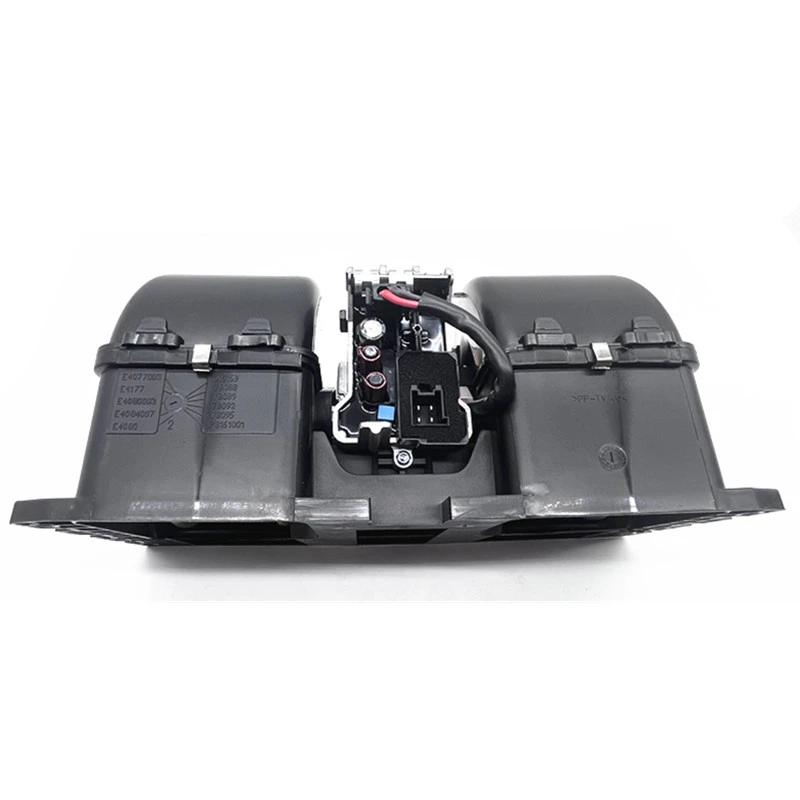
The heating function uses a heater core, which is a small radiator located inside the dashboard. Hot coolant from the engine is circulated through the heater core. A powerful fan, the motor soplador de camión, then pushes air through the fins of the heater core, warming the air before it enters the cab. A faulty or weak motor soplador de camión can make it impossible to maintain a comfortable cab temperature or effectively clear the windshield. Finding a reliable replacement truck blower motor is key to restoring the system's function (FindItParts, 2025). The A/C system works on a similar principle, using a compressor, condenser, and evaporator to cool the air. A series of blend doors inside the HVAC unit directs the airflow to the floor, vents, or defroster outlets.
The Exit Path: The Truck Exhaust Pipe and Aftertreatment
The final component of our exploration is the exhaust system. Its job is to safely route the hot, noisy exhaust gases from the engine away from the cab and to treat those gases to reduce harmful emissions. The system begins at the exhaust manifold on the engine and continues through a series of pipes.
A modern truck's exhaust system is far more than just a pipe. It includes a complex aftertreatment system to meet stringent environmental regulations. This system typically includes:
- Diesel Oxidation Catalyst (DOC): An initial device that converts carbon monoxide and hydrocarbons into carbon dioxide and water.
- Diesel Particulate Filter (DPF): This filter traps soot (particulate matter) from the exhaust. Over time, the DPF fills up and must be cleaned through a process called "regeneration," where the trapped soot is burned off at high temperatures.
- Selective Catalytic Reduction (SCR): This is the final stage for reducing nitrogen oxides (NOx), a major pollutant. A fluid called Diesel Exhaust Fluid (DEF), a solution of urea and water, is injected into the hot exhaust stream. The heat converts the urea into ammonia, which then reacts with the NOx in the SCR catalyst, converting it into harmless nitrogen gas and water vapor.
After passing through this entire aftertreatment system, the cleaned, quieter gases finally exit through the vertical tubo de escape de camión (or stacks). A properly functioning tubo de escape de camión and aftertreatment system is critical not only for legal compliance but also for engine performance, as a clogged or restricted system can create excessive backpressure, robbing the engine of power and efficiency.
Frequently Asked Questions (FAQ)
1. What is the most important component of a truck?
While every system is vital, the engine is arguably the most fundamental component, as it provides the power for all other functions. However, a truck cannot operate safely without a fully functional braking system, making the air compressor, air tanks, and brake valves equally critical from a safety perspective.
2. How does a diesel engine in a truck differ from a gasoline engine in a car?
The primary difference is the method of ignition. A gasoline engine uses a spark plug to ignite an air-fuel mixture. A diesel engine uses the heat of high compression to ignite the fuel. This is why diesel engines are built to be much more robust and generate significantly more torque, which is ideal for moving heavy loads.
3. Why do trucks use air brakes instead of hydraulic brakes?
Air brakes are used for several reasons. They can generate much higher braking forces than hydraulic systems, which is necessary for a heavy vehicle. They are also more reliable in the event of a leak; a small leak in a hydraulic system can lead to total brake failure, whereas a small leak in an air system is often manageable until it can be repaired, and a total loss of air pressure causes the spring-powered parking brakes to apply as a failsafe.
4. What is a "transmission solenoid valve" and what does it do?
A transmission solenoid valve is an electronically controlled valve used in automatic and automated manual transmissions (AMTs). The truck's computer (TCM) sends electrical signals to these solenoids, which then open or close to direct hydraulic fluid. This fluid pressure engages or disengages the clutches and gearsets inside the transmission to perform a gear shift. They are essential for modern, efficient, and smooth-shifting transmissions.
5. What is the difference between a turbocharger and a supercharger?
Both are forced induction systems designed to push more air into an engine. The key difference is how they are powered. A turbocharger is powered by the flow of exhaust gases (recycling waste energy). A supercharger is mechanically driven by the engine itself, usually with a belt connected to the crankshaft. Turbochargers are more common on heavy-duty trucks due to their efficiency.
6. What is the purpose of the hand brake valve in the cab?
The hand brake valve, often a yellow knob on the dash, controls the parking brakes for the tractor and trailer. When you pull the knob out, it releases the air holding the parking brakes off, and powerful internal springs engage the brakes mechanically. This is a critical failsafe mechanism. Pushing the knob in supplies air pressure to release these spring brakes, allowing the truck to move.
7. How often do the main components of a truck need maintenance?
Maintenance intervals vary greatly depending on the component, the truck's application (long-haul vs. local delivery), and the manufacturer's recommendations. Engine oil and filters might be changed every 15,000 to 50,000 miles. Fuel filters and air filters have similar schedules. More intensive maintenance on components like the transmission, axles, and braking system are often done at much longer intervals, such as every 100,000 or 250,000 miles, or as needed based on inspection.
A Final Perspective on Integrated Systems
To circle back to our initial thought, viewing a truck merely as a collection of individual parts misses the forest for the trees. The true marvel lies in the integration. The ECM's ability to interpret a signal from the caudalímetro de aire to perfectly time an injection event, which is then amplified by the turbocharger and translated into torque by the transmission, demonstrates a level of systemic harmony that is deeply impressive. Each component, from the largest cast-iron engine block to the smallest electroválvula de transmisión, has a role to play in this complex mechanical ballet. A nuanced appreciation for what the main components of a truck are is, therefore, an appreciation for the intricate relationships and dependencies that allow these machines to reliably and safely perform the work that underpins our modern economy. This understanding transforms the act of driving or repairing from a simple task into a dialogue with a sophisticated and powerful system.
References
A&I Parts Center. (2025). Air systems for semi-trucks and heavy-duty trucks. A&I Parts Center.
AllelcoElec. (2025). Purge valve guide: Function, symptoms, testing, and replacement for optimal engine performance. AllelcoElec. ,Symptoms,Testing,and-Replacement-for-Optimal-Engine-Performance.html
AutoStar Heavy Duty. (2025). Everything you need to know about your truck turbocharger. AutoStar Heavy Duty. https://autostarheavyduty.com/truck-turbocharger-guide-heavy-duty-performance/
FindItParts. (2025). Semi truck air heater components. FindItParts.
JIT Truck Parts. (2023). Getting to know your air system: Air dryers. JIT Truck Parts. https://www.jittruckparts.com/blog/getting-to-know-your-semi-truck-air-dryer
Van Horn Truck Parts. (2025). Heavy-duty truck engine parts. Van Horn Truck Parts.
Wallwork Truck Center. (2025). Truck parts guide: Understanding names & functions. Wallwork Trucks. https://wallworktrucks.com/truck-parts-guide-understanding-names-and-functions